MONITORING AND EVALUATION FOR WILDLIFE CONSERVATION
Learn how to plan and report on monitoring and evaluation activities for any type of conservation project

LEARN HOW TO
• Define project success in terms of results, objectives, and indicators
• Set indicators to track progress and assess project success
• Set indicators to track progress and assess project success
• Plan monitoring activities to track changes in the situation
• Plan evaluation activities to assess how impact was achieved and how much impact was due to the project
IMPORTANT!
Videos
Exercises & quizzes
EARN YOUR CERTIFICATE
To earn your certificate, you will need to take and pass our exam. This will be a multiple choice exam. Earning your certificate in this way is important to demonstrate to yourself and others (e.g. employers) that you have attained a high standard in this key skill set.
However, the exam is nothing to worry about. If you need more time or any kind of additional support for the exam then the instructor is there to help. Most people pass first time and there is a free retake for anyone that doesn't.
Once you earn your certificate you will be added to our WildTeam global skills directory.
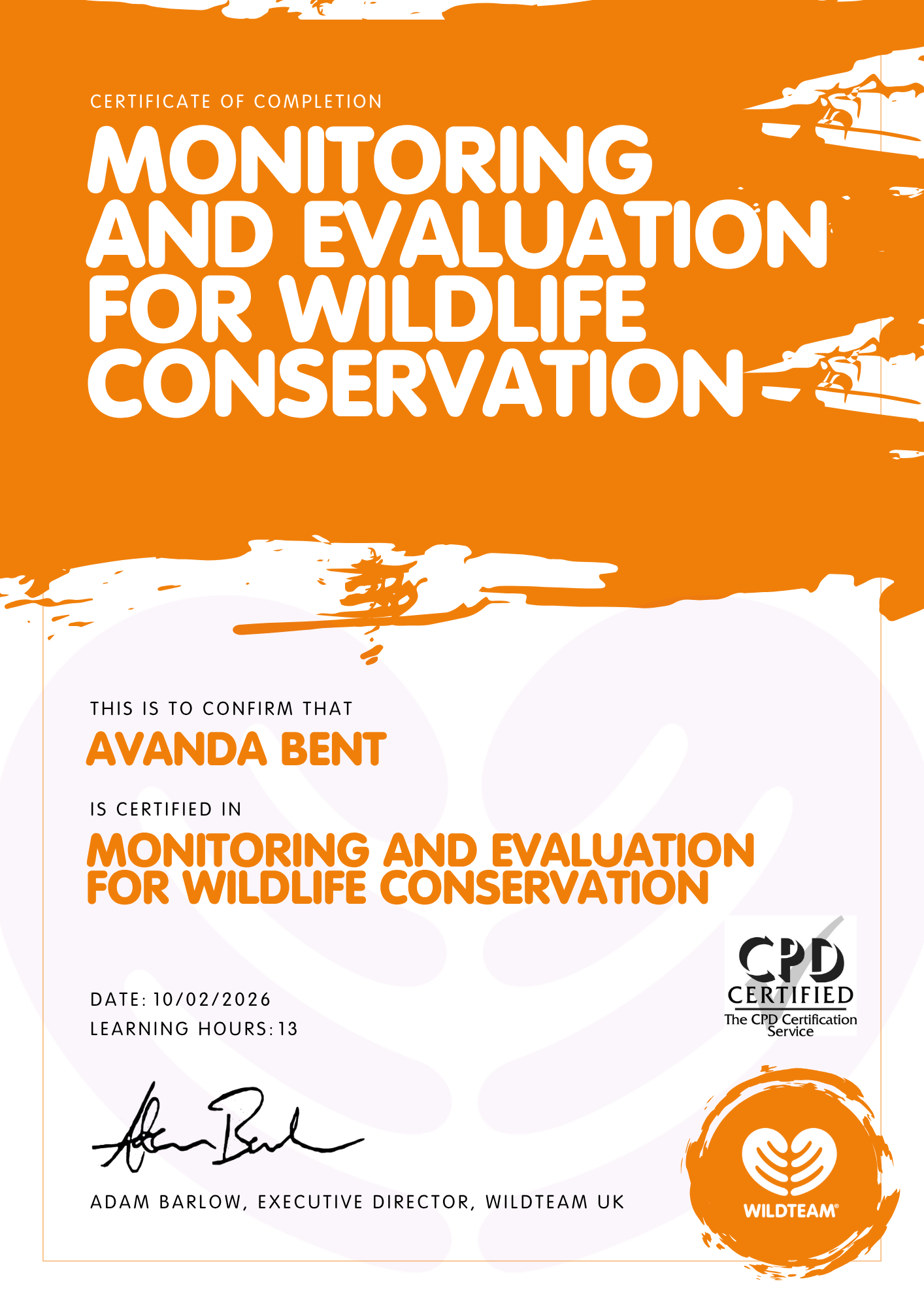
CPD CERTIFIED PROFESSIONAL TRAINING
Develop the skills to measure progress, assess results and use evidence to improve conservation projects. You will learn how to select indicators, collect useful data, evaluate outcomes and turn your findings into practical decisions and recommendations. Successfully completing the course awards 13 CPD hours, providing a clear record of your continued professional development.
CPD stands for Continuing Professional Development. It is the ongoing process of building your knowledge, developing new skills and keeping your professional practice up to date throughout your career. Rather than learning stopping once you have completed your formal education, CPD encourages you to continue developing as your role, responsibilities and sector evolve.
CPD can take many forms, including training courses, workshops, conferences, webinars, mentoring and other structured learning activities. It gives professionals a way to reflect on the skills they already have, identify areas for development and take practical steps to improve their knowledge and performance.
Completing a CPD accredited course gives you a clear record of the structured learning you have undertaken. It can help you demonstrate your commitment to professional development to employers, professional bodies and potential clients, while also showing that you are actively investing in your skills and career.
For conservation professionals, CPD is particularly valuable because the sector is constantly changing. New approaches, tools, evidence and challenges continue to shape how conservation work is planned and delivered. By completing relevant professional development, you can strengthen your confidence, improve the way you work and apply new skills directly to real conservation projects.
CPD can take many forms, including training courses, workshops, conferences, webinars, mentoring and other structured learning activities. It gives professionals a way to reflect on the skills they already have, identify areas for development and take practical steps to improve their knowledge and performance.
Completing a CPD accredited course gives you a clear record of the structured learning you have undertaken. It can help you demonstrate your commitment to professional development to employers, professional bodies and potential clients, while also showing that you are actively investing in your skills and career.
For conservation professionals, CPD is particularly valuable because the sector is constantly changing. New approaches, tools, evidence and challenges continue to shape how conservation work is planned and delivered. By completing relevant professional development, you can strengthen your confidence, improve the way you work and apply new skills directly to real conservation projects.
WHY ARE MONITORING AND EVALUATION SKILLS IMPORTANT?
IS THIS COURSE RIGHT FOR ME?
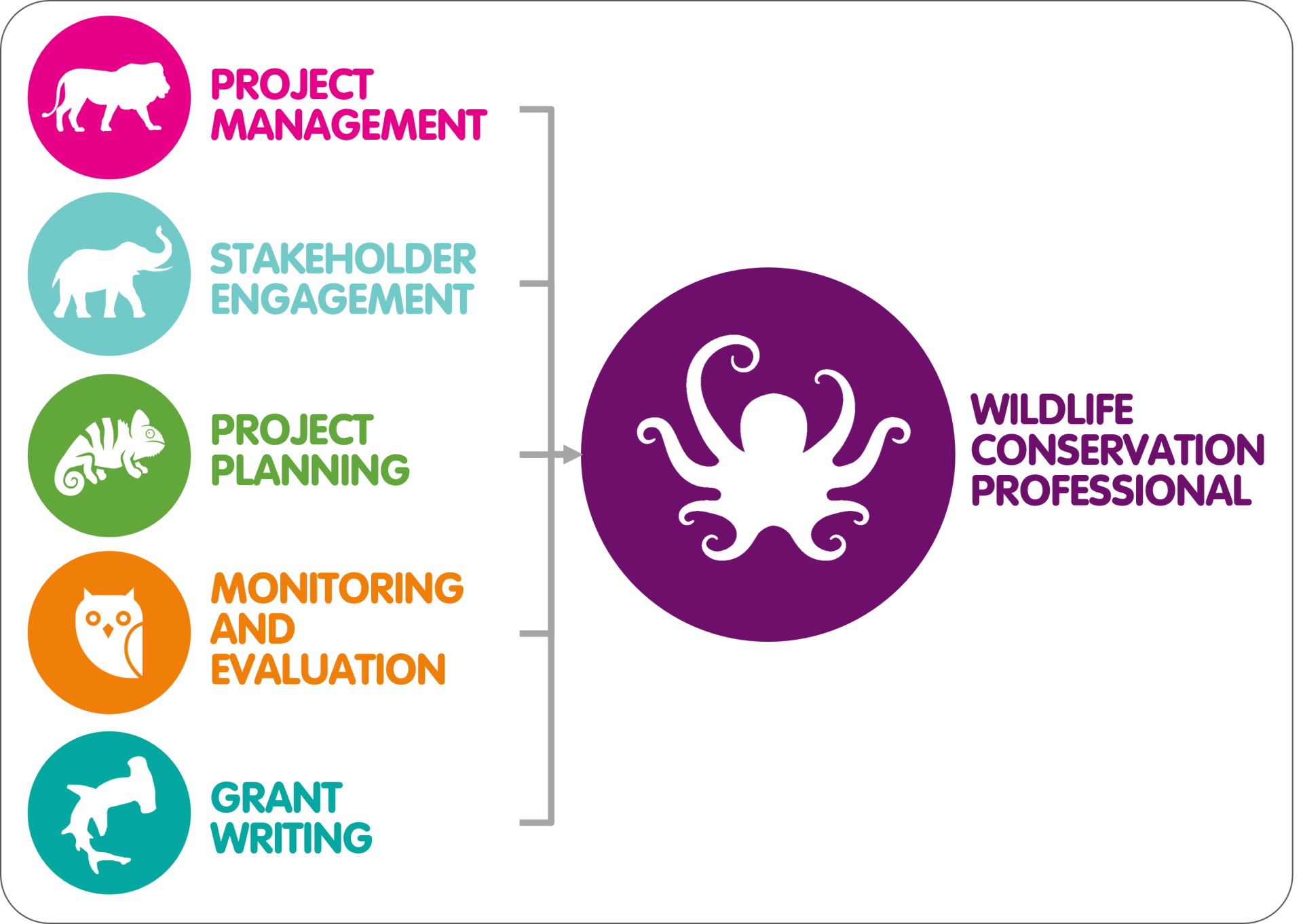
BECOME A WILDLIFE CONSERVATION PROFESSIONAL
ONE PAYMENT, FULL ACCESS, MAXIMUM VALUE.
Project Management | Project Planning | Grant Writing | Stakeholder Engagement | Monitoring and Evaluation | Launching Your Career | Consulting | Facilitation | Delivering Training | Ethical Decision Making | Human Rights-Based Approach | Free, Prior and Informed Consent
Unlock unlimited learning with the WildTeam Memberships. For £290/year or £29/month, you get full access to every course in our school, including all current courses and all future courses released during your membership. Individual courses cost £190 each. With 11 courses already available, buying them separately would cost £2,090. Memberships give you access to all of them, plus future releases, for less than the price of two.
COURSE CONTENT
DOWNLOAD YOUR BEST PRACTICE