PROJECT MANAGEMENT FOR WILDLIFE CONSERVATION
Get the skills to effectively manage any type of conservation project

PMWC IS NOW AVAILABLE IN FRENCH!
LEARN HOW TO
- Apply principles to maintain high standards of effectiveness and ethics.
- Define roles to clarify team structure and decision-making.
- Use phases to manage a project from start to finish.
- Use control processes to keep the project on track and adapt to changing conditions.
- Set up administrative processes to help conduct effective meetings and develop high-quality documents.
Videos
Exercises & quizzes
As a Projects Manager, the skills I've learned have improved the way I organize and manage conservation work. The courses are thoughtfully designed, inspiring, and offer a great opportunity to learn from others
— Reetika M., India
The Project Management for Wildlife Conservation training has ignited a spark in me to lead impactful projects that protect South Africa's precious wildlife.
— Mbali Sishange, South Africa
As head of department at the National School of Water and Forestry, my initial plan is to strengthen students' skills through a training module and also to develop projects based on the skills I have acquired.
— Konan Cedric, Côte d'Ivoire
EARN YOUR CERTIFICATE
To earn your certificate, you will need to take and pass our exam. This will be a multiple choice exam. Earning your certificate in this way is important to demonstrate to yourself and others (e.g. employers) that you have attained a high standard in this key skill set.
However, the exam is nothing to worry about. If you need more time or any kind of additional support for the exam then the instructor is there to help. Most people pass first time and there is a free retake for anyone that doesn't.
Once you earn your certificate you will be added to our WildTeam global skills directory.
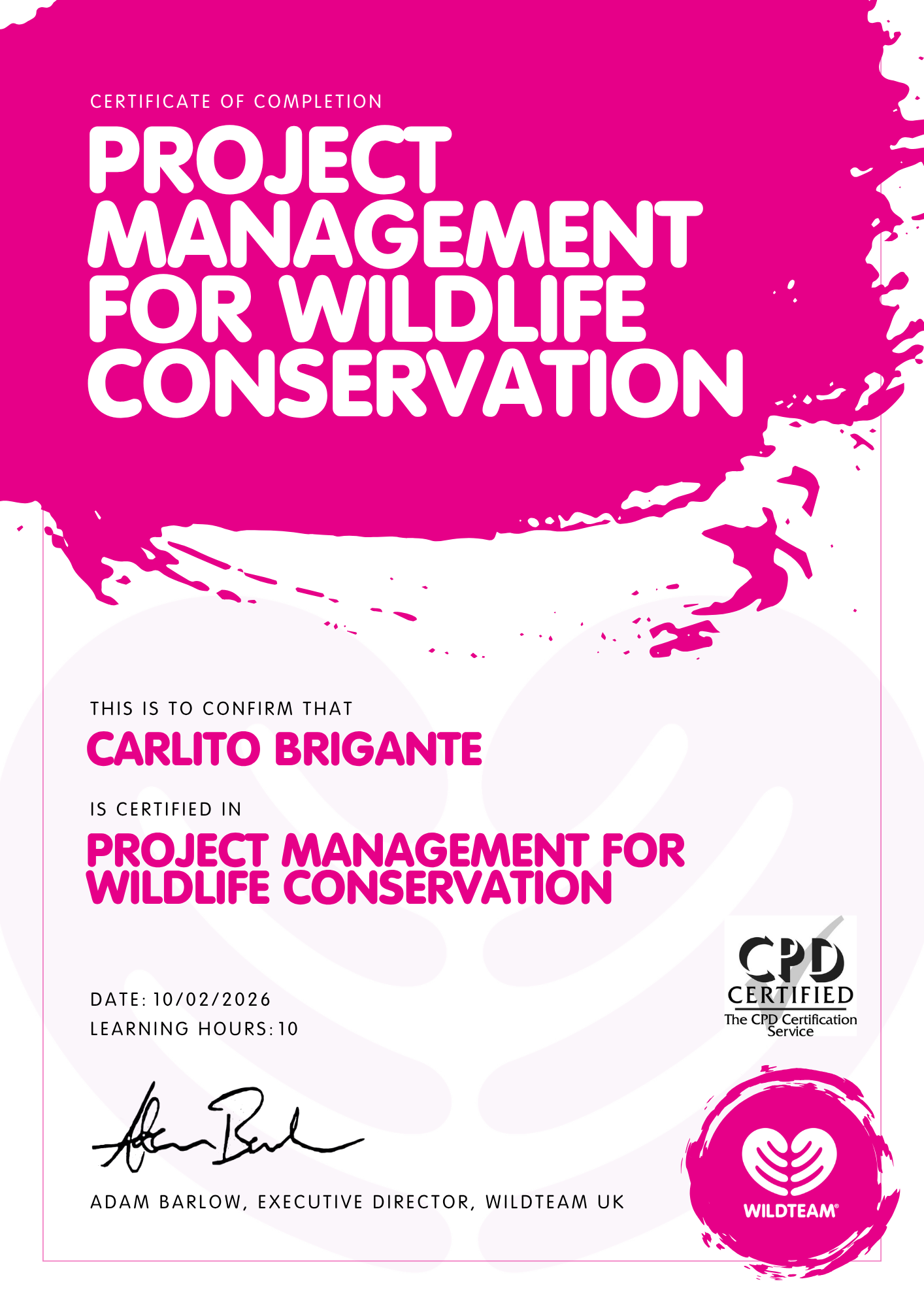
CPD CERTIFIED PROFESSIONAL TRAINING
Learn how to manage conservation projects from implementation through to completion. You will develop practical skills in scheduling work, managing budgets and risks, supporting project teams and adapting plans when circumstances change. Successfully completing the course awards 10 CPD hours, providing a recognised record of your professional development.
CPD stands for Continuing Professional Development. It is the ongoing process of building your knowledge, developing new skills and keeping your professional practice up to date throughout your career. Rather than learning stopping once you have completed your formal education, CPD encourages you to continue developing as your role, responsibilities and sector evolve.
CPD can take many forms, including training courses, workshops, conferences, webinars, mentoring and other structured learning activities. It gives professionals a way to reflect on the skills they already have, identify areas for development and take practical steps to improve their knowledge and performance.
Completing a CPD accredited course gives you a clear record of the structured learning you have undertaken. It can help you demonstrate your commitment to professional development to employers, professional bodies and potential clients, while also showing that you are actively investing in your skills and career.
For conservation professionals, CPD is particularly valuable because the sector is constantly changing. New approaches, tools, evidence and challenges continue to shape how conservation work is planned and delivered. By completing relevant professional development, you can strengthen your confidence, improve the way you work and apply new skills directly to real conservation projects.
CPD can take many forms, including training courses, workshops, conferences, webinars, mentoring and other structured learning activities. It gives professionals a way to reflect on the skills they already have, identify areas for development and take practical steps to improve their knowledge and performance.
Completing a CPD accredited course gives you a clear record of the structured learning you have undertaken. It can help you demonstrate your commitment to professional development to employers, professional bodies and potential clients, while also showing that you are actively investing in your skills and career.
For conservation professionals, CPD is particularly valuable because the sector is constantly changing. New approaches, tools, evidence and challenges continue to shape how conservation work is planned and delivered. By completing relevant professional development, you can strengthen your confidence, improve the way you work and apply new skills directly to real conservation projects.
IS THIS COURSE RIGHT FOR ME?
WHY ARE PROJECT MANAGEMENT SKILLS SO IMPORTANT?
BECOME A WILDLIFE CONSERVATION PROFESSIONAL
ONE PAYMENT, FULL ACCESS, MAXIMUM VALUE.
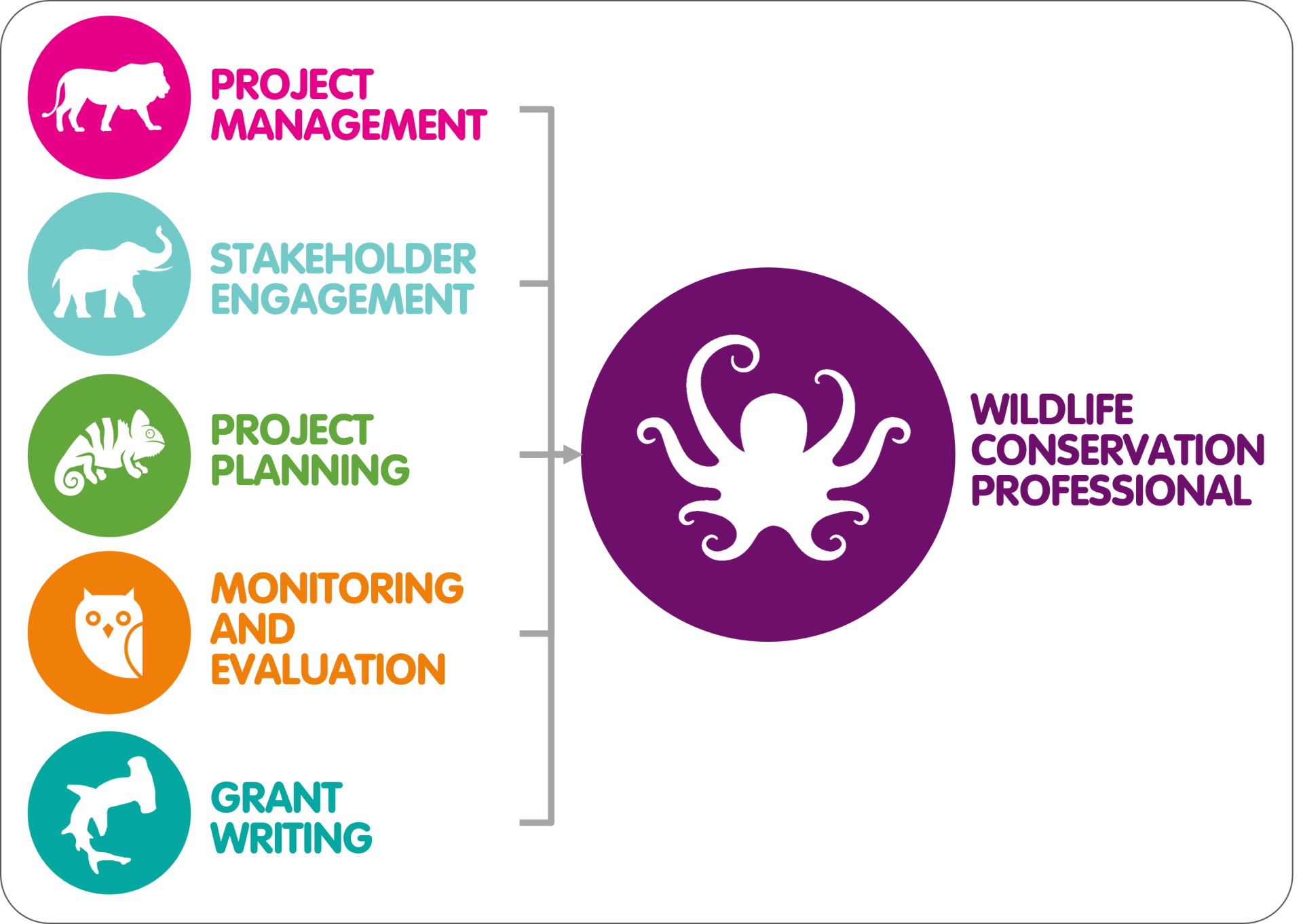
Project Management | Project Planning | Grant Writing | Stakeholder Engagement | Monitoring and Evaluation | Launching Your Career | Consulting | Facilitation | Delivering Training | Ethical Decision Making | Human Rights-Based Approach | Free, Prior and Informed Consent
Unlock unlimited learning with the WildTeam Memberships. For £290/year or £29/month, you get full access to every course in our school, including all current courses and all future courses released during your membership. Individual courses cost £190 each. With 11 courses already available, buying them separately would cost £2,090. Memberships give you access to all of them, plus future releases, for less than the price of two.
COURSE CONTENT
DOWNLOAD YOUR BEST PRACTICE