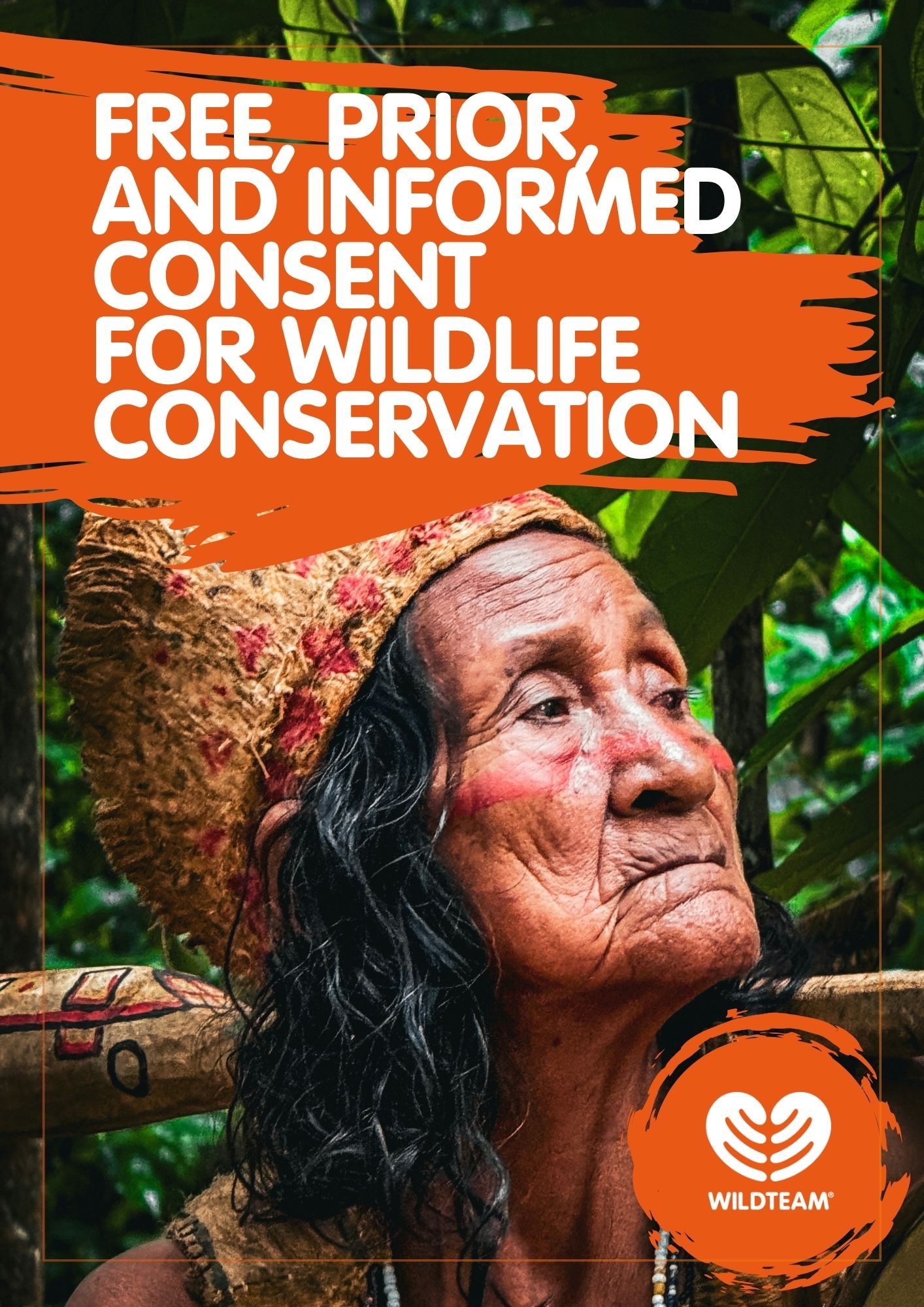
How do you assess whether a conservation project needs FPIC?
Sep 8
/
Adam Barlow
Quick answer
Free, Prior, and Informed Consent is a lengthy process for both the project team and the community, and it requires real funds and capacity to carry out properly. Applying it where it is not needed wastes time, money, and goodwill on a process the situation does not call for. Failing to apply it where it is needed exposes the community to harm and the project to conflict, reputational damage, and legal risk.
Before starting FPIC, a project team should carry out three preliminary activities: determine whether a community is involved and what status it holds, identify the potential effects the conservation activities could have on that community, and assess those effects to decide whether the full FPIC process is required.
Source: WildTeam. (2026). Free, Prior, and Informed Consent for Wildlife Conservation v1. WildTeam, Cumbria, UK.
You can access the full best practice, worksheet template, and agreement template through WildTeam's conservation training courses.

Contents
-
The two mistakes this assessment prevents
-
How to determine if a community is involved
-
How to identify potential effects
-
How to assess potential effects
-
What the rating means for your project
-
FAQ
The two mistakes this assessment prevents
Wildlife conservation activities often involve managing natural resources that Indigenous Peoples and Local Communities depend on for food security, traditional medicine, cultural practice, and livelihoods built up over generations. A project team that skips a proper assessment risks two opposite mistakes. Applying the full FPIC process where it is not needed places a disproportionate burden on a community's time and the project's budget. Skipping FPIC where it is needed exposes the community to harm, from lost access to traditional territory through to disruption of governance and cultural practice, and exposes the project to conflict and legal risk.
This preliminary assessment is not the same as the final assessment of effects that takes place later in the FPIC process. It exists to answer a narrower question early: does this situation call for FPIC at all, and if so, how extensively should it be applied.
How to determine if a community is involved
A project's conservation activities may affect more than one community, and each one could be Indigenous Peoples or a local community. However many are involved, the project team should assess each one using the FPIC worksheet, documenting the evidence for its conclusion.
Indigenous Peoples. A community should be treated as Indigenous Peoples where it self-identifies as such, individual members are accepted by the community as belonging to it, and the community shows historical continuity from societies that lived on their territories before colonisation or settlement, a strong connection to their territory and its natural resources, cultural distinctiveness in language, belief, or social and political systems, a resolve to maintain that identity for future generations, and non-dominant status within the broader society. Self-identification is the fundamental criterion. The other criteria act as supporting evidence, and a community does not need to meet every one of them individually. The determination is also independent of government recognition, so a project team can treat a community as Indigenous Peoples even where a government does not.
Local communities. A community should be treated as a local community where it has a long-standing presence in the area without the pre-colonial continuity that defines Indigenous status, depends on the area's resources through custom or tradition rather than formal legal entitlement, does not carry the international legal recognition attached to Indigenous status, and is located adjacent to the area affected by the conservation activities, regardless of its size. As with Indigenous status, these criteria are weighed together rather than treated as a strict checklist.
If a community meets the Indigenous Peoples criteria, FPIC is a legal obligation and the project team moves to the next step. If it meets the local community criteria, FPIC applies as best practice rather than a legal right, and the project team moves to the next step regardless. If a group meets neither set of criteria, the project team does not need to use the FPIC approach, and can instead apply a standard stakeholder engagement approach.
How to identify potential effects
Once a community has been identified, the project team should carry out an initial assessment of how the proposed conservation activities might affect it, recording potential negative effects in the FPIC worksheet. This assessment should consider, without being limited to, six categories of effect.
- Access effects. Conservation activities may limit a community's access to traditional territories, hunting grounds, fishing areas, grazing lands, or the collection sites for medicinal plants and other resources essential to food security and livelihoods.
- Cultural effects. Activities may interfere with ceremonies, spiritual practices, or cultural activities that depend on specific landscapes, species, or seasonal patterns.
- Economic effects. Activities may restrict traditional resource use, reduce income opportunities, or increase the cost of accessing alternative resources.
- Social effects. Activities may require a community to relocate, or may alter traditional social structures.
- Knowledge system effects. Activities may weaken or undermine indigenous knowledge systems and stewardship traditions built up and passed down over generations.
- Decision-making effects. Conservation planning processes may exclude community voices from decisions affecting their own territories and resources.
How to assess potential effects
Once potential effects have been identified, the project team should assess each one to decide whether it is substantial enough to warrant the full FPIC process. The FPIC worksheet scores each effect on two scales.
Severity is scored as high, where the effect would remove or severely damage something essential to the community, medium, where the effect would seriously disrupt something important but the community would have other ways to meet the same need, or low, where the effect would cause minor or temporary inconvenience with little lasting impact.
Likelihood is scored as certain, where the effect is already happening or will definitely happen as planned, high, where the effect is very likely to happen, medium, where the effect might happen depending on decisions not yet made, or low, where the effect is unlikely to happen.
The worksheet combines these two scores to produce an overall rating of high, medium, or low for each effect.
What the rating means for your project
If any identified effect receives an overall high rating, the project team should proceed with the full FPIC process, regardless of whether the community is Indigenous Peoples or a local community. If the overall rating is medium, FPIC should still be applied as the default, since the project team cannot yet be confident that standard stakeholder engagement would be sufficient.
Where every identified effect receives an overall low rating, the next step depends on the community's status. For Indigenous Peoples, the project team should still proceed with FPIC, since it is a legal obligation that does not depend on the severity of the effect, though the process can be scaled down in proportion to the low rating. The team must remain ready to move to a more involved process if the community itself indicates the effect is more significant than the initial assessment suggested. For local communities, the project team may decide to use a standard stakeholder engagement approach instead of the full FPIC process, so as not to place an unnecessary burden on the community's time.
This decision not to proceed with FPIC for a local community carries weight, particularly on a large project, since an incorrect assessment could unintentionally lead to substantial harm. Where the project is large in scale, the project team should consider carrying out initial consultations with the community, or involving independent assessors, before finalising a decision not to proceed. This guards against any bias the project team may unintentionally bring to its own assessment.
Whatever the outcome, the project team should record its scoring and reasoning for each effect, so the decision can be reviewed and revisited if new information or changing conditions emerge as the project develops.
FAQ
Does this preliminary assessment replace the full assessment of effects later in the FPIC process?
No. This preliminary assessment answers a narrower question: whether FPIC is needed at all, and how extensively it should be applied. If the FPIC process goes ahead, a separate and final assessment of effects takes place later, led by the community itself, as part of building the shared knowledge base the negotiation will rest on.
Who decides whether a community counts as Indigenous Peoples or a local community?
Self-identification is the starting point for Indigenous status. The community identifies as Indigenous Peoples, and its own members are accepted by the community as belonging to it. The other criteria, such as historical continuity and territorial connection, provide supporting evidence rather than a checklist a community must satisfy in full. This determination does not depend on whether a national government formally recognises the community as Indigenous.
Can a project team decide not to apply FPIC at all?
Yes, but only where the preliminary assessment shows that no identified effect reaches a high or medium overall rating, and only for a local community rather than Indigenous Peoples, since FPIC is a legal obligation for Indigenous Peoples regardless of how the effects are scored. Even then, a large project should weigh this decision carefully, since an incorrect low rating could still expose a community to real harm.
What happens if new effects emerge after the preliminary assessment is complete?
The FPIC process is designed to be iterative. Recording the scoring and reasoning behind each effect at the outset means the project team can revisit and revise its assessment if new information comes to light, whether that is during later stages of engagement or once activities are already under way.
Latest from our blog
UNLOCK OUR FULL BEST PRACTICES AND GET CERTIFIED CONSERVATION SKILLS
Ready to go deeper?
Build practical skills for wildlife conservation by exploring our expert-led courses designed to help you apply what you’ve learned in real-world contexts. From career development to technical conservation tools, our training is built to support your next step.
EXPLORE
Success stories
Blog
Courses
Bursaries
Best practices
Team membership
Conservation Trainers Network
EMPOWERING CONSERVATIONISTS TO RESTORE NATURE
We give conservationists worldwide the knowledge, the skills, and the community support they need to design and deliver conservation projects that have more impact.
WILDTEAM is a registered charity in England and Wales. Number 1149465. © 2026 by WildTeam
Stay connected with WildTeam
Get practical tools, training insights, and opportunities to help you deliver more effective conservation projects.
Thanks for connecting!