
Conservation project management glossary: 50+ terms defined
Jan 27
/
Adam Barlow

Overview
Managing a conservation project comes with its own vocabulary. Whether you're reading through a project plan for the first time, trying to understand what your project manager means by "exception", or need to explain the difference between a milestone and a task to your team, this glossary provides clear definitions of essential conservation project management terms.
All terms are used consistently across WildTeam resources.
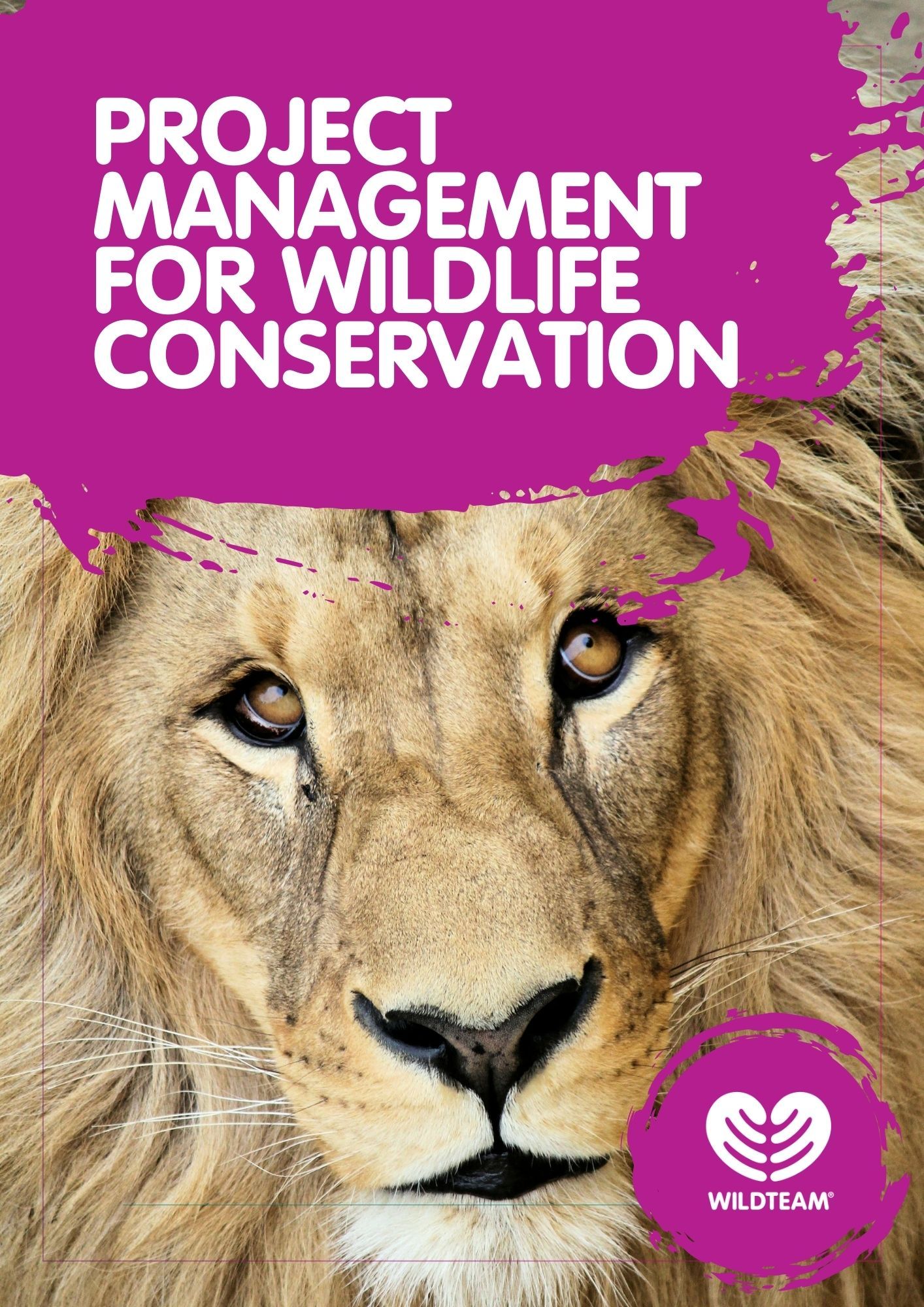
You can access the full glossary, when you download the Project Management for Wildlife Conservation best practice as part of the course.
You can access the full glossary, when you download the Project Management for Wildlife Conservation best practice as part of the course.
UNLOCK OUR FULL BEST PRACTICES AND GET CERTIFIED CONSERVATION SKILLS
Ready to go deeper?
Build practical skills for wildlife conservation by exploring our expert-led courses designed to help you apply what you’ve learned in real-world contexts. From career development to technical conservation tools, our training is built to support your next step.
Glossary of project management terms
A
Action: New work noted in a meeting that has yet to be transferred to the work plan and classified as a specific type of project work (such as a task or milestone). Actions are documented in status meetings and then formally added to the project tracker.
Activity: A piece of work representing a key part of a work package, made up of a collection of related milestones and tasks. For example, "Training rangers in the use of patrolling software" is an activity that would include milestones like "Training materials developed" and tasks like "Draft training manual". Activities sit between work packages (above) and milestones (below) in the project work hierarchy.
Adaptation plan: A proposed updated version of the project plan, created when a project goes into exception. The adaptation plan documents suggested changes to project parameters (impact, schedule, or budget) and is submitted alongside an exception report to the project director for authorisation. If approved, the content of the adaptation plan becomes the new project plan.
Administrative processes: Procedures for managing documents and meetings efficiently throughout the project. The two administrative processes are managing documents and managing meetings. These processes ensure high-quality documentation, clear communication, and effective use of meeting time.
Adherence: The extent to which the project team is following the signed-off project plan. Adherence is assessed through the managing adherence control process, typically by the project assurance role for large or high-risk projects. Poor adherence indicates the project may be delivering different results than planned, even if work is being completed.
Assurance report: A document produced by the project assurance role that objectively assesses whether the project is adhering to the project plan. The report examines whether the project team is following agreed processes, delivering planned work packages, and achieving results as documented in the project plan.
B
Budget: The planned project expenditure, one of the three project parameters used to measure progress. The budget covers all costs needed to deliver the project's work packages within the defined schedule. Actual expenditure is tracked against the planned budget throughout the project using the project tracker.
Biodiversity target: The species, habitat, or ecosystem that the conservation project aims to protect or improve. Biodiversity targets are identified during the situation analysis in the plan phase and documented in the conservation strategy section of the project plan.
C
Chair: The meeting role responsible for conducting the meeting according to the agenda, ensuring all agenda items are covered, facilitating discussion, and ensuring actions and decisions are clearly understood by all attendees. The chair keeps the meeting on track and on time.
Close phase: The fifth and final project phase, focused on evaluating project results, reporting to stakeholders, filing documents in organisational archives, and formally ending the project. Key activities include producing the project-end report, completing stakeholder engagement activities, and demobilising the project team.
Conservation project: A temporary effort to achieve a measurable conservation impact within a defined schedule and budget. Projects have clear start and end dates, unlike ongoing programmes. For example: "A 3-year project with a £50,000 budget to reduce wild dog poisoning by 30% in Kruger National Park".
Conservation strategy: The section of the project plan showing the current situation (threats, biodiversity targets, stakeholders) and planned changes the project will achieve. Developed using situation analysis and results chains or theory of change models.
Contributor: A document role assigned to someone who provides input to help the producer create a document draft. Contributors share expertise, data, or perspectives but are not responsible for writing the document or approving it.
Control processes: Procedures for keeping the project on track and enabling adaptation to new information and changing conditions. The three control processes are managing progress, managing change, and managing adherence. These processes ensure the project achieves its planned impact within schedule and budget.
D
Document review tracker: A table used to manage review comments and producer responses during document development. Reviewers add their comments to the tracker, and the producer documents how they responded to each comment, enabling transparent decision-making about document content.
Do something principle: One of the four guiding principles: starting conservation work despite information gaps, rather than delaying action until perfect information is available. The principle recognises that biodiversity continues to degrade while information is being gathered. Work packages with high confidence are prioritised, while research fills information gaps for later work packages.
Draft: A version of a document that has not yet been signed off. Drafts are numbered sequentially (d0.1, d0.2, d0.3, etc.) to track iterations during the review and update cycle. Once signed off, the draft becomes version 1 (v1).
E
Embrace change principle: One of the four guiding principles: welcoming and adapting to new information and changing conditions rather than rigidly following outdated plans. Applied through the managing change control process, where risks, issues, opportunities, and lessons learned are documented, assessed, and responded to formally.
Enabling roles: Roles that influence project management but are not directly responsible for carrying out project work. The three enabling roles are leader, operations support, and project assurance. All enabling roles are optional and assigned based on project scale and organisational structure.
Exception: The status when a project cannot achieve the project plan's parameters (impact, schedule, or budget) due to a high-rated risk, issue, or opportunity. When in exception, the project manager produces an exception report and adaptation plan, requesting authorisation from the project director to either update the project plan or close the project.
Exception report: A document detailing why the project plan can no longer be achieved, produced when a project goes into exception. The report explains how a risk, issue, or opportunity prevents the project team from achieving planned impact within the original schedule and budget, despite the planned response. Submitted alongside an adaptation plan to the project director.
F
Focus on impact principle: One of the four guiding principles: prioritising what the project aims to achieve (conservation impact) over how it will be achieved (work packages). A project has failed if it delivers all work packages on time and budget but does not achieve the planned conservation impact. Applied by tracking progress toward impact objectives through status meetings.
Fund phase: The second project phase, focused on securing the funding needed to cover all subsequent project costs. Activities include applying to donors for funds (often multiple donors for different work packages) and confirming funds have arrived before advancing to the prepare phase.
I
Impact: The desired conservation change the project aims to achieve, one of the three project parameters. Impact is measured against specific objectives and indicators in the monitoring and evaluation section of the project plan. For example: "Reduce lion poisoning by 30%" or "Increase coral cover by 15%".
Impact: The desired conservation change the project aims to achieve, one of the three project parameters. Impact is measured against specific objectives and indicators in the monitoring and evaluation section of the project plan. For example: "Reduce lion poisoning by 30%" or "Increase coral cover by 15%".
Implement phase: The fourth project phase where conservation work packages are delivered. This is typically the longest phase (often 3-4 years) where the actual conservation activities happen. The project manager oversees delivery while workstream leaders and members carry out assigned milestones and tasks.
Indicator: A measurable variable that shows progress toward achieving an objective. Indicators are defined in the monitoring and evaluation section of the project plan and tracked throughout the project. For example, for the objective "Reduce lion poisoning", an indicator might be "Number of lion poisoning incidents per year".
Informed after sign-off: A document role assigned to people who should receive the final signed-off document but are not involved in producing, reviewing, or approving it. For example, donor staff might be informed after a status report is signed off.
Issue: Something that is currently happening or has already happened that negatively affects project parameters (impact, schedule, budget) or creates negative effects on other wildlife or humans. Issues are often risks that were either not identified or not managed effectively. Issues are more expensive to manage than risks because the negative effect is already occurring.
learned.
learned.
L
Leader: An enabling role responsible for day-to-day management of the lead organisation and deciding on project risks, issues, and opportunities that may affect the organisation's reputation. The leader typically line manages the project director and may be assigned reviewer or sign-off authority roles for key documents.
Leader: An enabling role responsible for day-to-day management of the lead organisation and deciding on project risks, issues, and opportunities that may affect the organisation's reputation. The leader typically line manages the project director and may be assigned reviewer or sign-off authority roles for key documents.
Lesson learned: Knowledge gained through project delivery that can improve current or future projects. Lessons learned are recorded in the project tracker as things that "went well" or "could have gone better", with documented responses about how the project will incorporate the learning.
Line management: The structure showing who each role reports to and takes instructions from for project decisions. Line management clarifies authority and accountability within the project team and between enabling roles. For example, workstream members are line managed by workstream leaders, who are line managed by the project manager.
Likelihood: A score (very likely, likely, possible, unlikely, very unlikely, or certain for issues) assigned when assessing risks, issues, and opportunities to indicate the probability of them occurring. Combined with the effect score to calculate an overall rating. Issues always have a likelihood score of "certain" because they are already happening.
M
Major milestone: A distinct reference point marking the completion of a major step toward finishing an activity. Major milestones are used to track project progress and may represent the achievement of several minor milestones or tasks. For example: "Patrolling software training workshop complete".
Major milestone: A distinct reference point marking the completion of a major step toward finishing an activity. Major milestones are used to track project progress and may represent the achievement of several minor milestones or tasks. For example: "Patrolling software training workshop complete".
Managing adherence: A control process for objectively assessing how well the project team is adhering to the project plan. Typically activated for large, complex, or high-budget projects where independent verification is needed. The project assurance role conducts the assessment and produces an assurance report.
Managing change: A control process for identifying, documenting, assessing, and responding to new information and changing conditions. The process handles risks, issues, opportunities, and lessons learned, enabling the project to adapt while maintaining control. When changes trigger exception status, the process includes creating an exception report and adaptation plan.
Managing documents: An administrative process ensuring efficient development, filing, and communication of all project documents. The process includes assigning document roles, using standardised naming conventions, conducting reviews, obtaining sign-off, and filing documents in the organisational archive.
Managing meetings: An administrative process helping ensure meetings are necessary, well-planned, and make effective use of attendees' time. The process covers planning (setting objectives, agenda, roles), arranging, holding, and communicating meeting outcomes.
Managing progress: A control process for keeping the project on track by providing regular checkpoints to review progress. Implemented through status meetings at various frequencies (weekly, monthly, quarterly, annual) where the project team reviews completed work, plans upcoming work, and addresses risks and issues.
Meeting report: A document that formally records the date, objectives, attendance, decisions, actions, and notes from external meetings between project team members and people outside the project team. For internal meetings, information is captured in the meetings tab of the project tracker instead.
Minor milestone: An additional, finer-scale level of control between a major milestone and tasks, used when it is difficult to keep track of all tasks associated with a major milestone. For example: "Patrolling software training materials signed-off" could be a minor milestone under the major milestone "Patrolling software training workshop complete".
Monitoring and evaluation: The section of the project plan documenting objectives, tolerance limits, indicators, and monitoring activities that will be used to assess whether the project is achieving its planned impact.
N
Notetaker: The meeting role responsible for documenting notes, actions, and decisions during the meeting. For internal meetings, the notetaker records information in the meetings tab of the project tracker. For external meetings, the notetaker creates a meeting report.
O
Objective: A specific, measurable statement of what the project aims to achieve, documented in the monitoring and evaluation section of the project plan. Objectives should have associated indicators and tolerance limits. For example: "Increase awareness of British 18- to 24-year-olds about climate change effects by 20%".
Objective: A specific, measurable statement of what the project aims to achieve, documented in the monitoring and evaluation section of the project plan. Objectives should have associated indicators and tolerance limits. For example: "Increase awareness of British 18- to 24-year-olds about climate change effects by 20%".
Operations support: An enabling role providing operational support and guidance to project team members on topics like financial management, human resource management, and fundraising. Operations support roles are assigned based on the type of support needed (e.g., external communications support, payroll support).
Opportunity: Something that could happen or is already happening that positively affects project parameters (impact, schedule, or budget). Opportunities have the potential to enable the project to exceed planned impact or achieve impact with less budget or schedule. Managed through the managing change process with responses of ignore, enable, enhance, or share.
Organiser: The meeting role responsible for setting the meeting objective, agenda, location, date, and time; inviting attendees; assigning meeting roles; and organising document creation. The organiser ensures meetings are necessary and well-prepared.
P
Phase: A major stage in the project lifecycle that includes a set of activities that should be completed before the next phase starts. The five phases are plan, fund, prepare, implement, and close. Each phase ends with a phase-end meeting where the project director authorises advancement to the next phase.
Phase: A major stage in the project lifecycle that includes a set of activities that should be completed before the next phase starts. The five phases are plan, fund, prepare, implement, and close. Each phase ends with a phase-end meeting where the project director authorises advancement to the next phase.
Phase-end meeting: An authorisation gate held at the end of each phase where the project manager (or project planner in early phases) presents evidence that the phase is complete and requests permission from the project director to advance to the next phase. Evidence typically includes a phase-end report and other phase-specific documents.
Phase-end report: A document detailing the work carried out in the previous phase and presenting the plan for the next phase. The report is presented at phase-end meetings as evidence that the phase is complete. Content is generated from the project tracker.
Plan phase: The first project phase, focused on creating the project plan that describes what the project aims to achieve and how. Key activities include mobilising the project director and project planner, setting up the project tracker and control processes, producing the project plan, and holding a phase-end meeting.
Prepare phase: The third project phase, focused on getting the project team ready to implement the project. Activities include mobilising the project manager and support roles, transferring information from the signed-off project plan into the project tracker, adjusting processes, mobilising workstream leaders, and carrying out detailed work planning.
Producer: A document role assigned to the person responsible for creating document drafts, considering reviewer comments, updating the document accordingly, and documenting their reasoning in the document review tracker. The producer coordinates the document development process but the sign-off authority makes final approval decisions.
Programme: A collection of projects working toward a strategic objective. Programmes provide oversight for what combined projects aim to achieve, while projects deliver manageable portions of work within that programme. Projects within a programme can be sequential, parallel, or both.
Project assurance: An enabling role that objectively assesses whether the project is adhering to the project plan. This role should be independent from the project team (often assigned to external evaluators or donor staff) to ensure objectivity. Assigned only for projects requiring independent assessment, typically large or high-budget projects.
Project director: The most senior project team role, ultimately accountable for project delivery. The project director decides on any changes to the project plan and when to close the project. All other project team roles are mobilised and line managed either directly or indirectly by the project director.
Project-end report: A document comparing what the project achieved against what was planned in the original project plan. Produced in the close phase, the report covers results, stakeholder engagement, work delivery, impact, schedule, budget, and lessons learned.
Project manager: The only mandatory project team role, responsible for day-to-day project management from the prepare phase through the close phase. The project manager makes decisions about daily project operations as long as the project is on track to achieve the project plan. If not assigned, project director must take on these responsibilities.
.
.
Project parameters: The three measures used to assess project progress: impact (desired conservation change), schedule (timeframe), and budget (planned expenditure). Parameters are set in the project plan with associated tolerance limits.
Project plan: The blueprint for the entire project, against which progress is assessed. The plan includes sections on introduction, conservation strategy, monitoring and evaluation, roles, stakeholder engagement, risks, work plan, budget, and references. Once signed off, the plan can only be changed through the managing change process.
Project planner: A project team role responsible for producing the project plan and raising funds during the plan and fund phases. The project planner is mobilised by the project director and demobilised once funds are secured.
Project support: A project team role providing support to the project manager, particularly in following control processes. Project support may be assigned tasks like creating status reports, updating the project tracker, or managing document filing.
Project team roles: Roles directly responsible for carrying out the project. The six project team roles are project director, project planner, project manager, project support, workstream leader, and workstream member. All roles except project manager are optional.
Project tracker: The most critical project document, used to manage day-to-day project work from the prepare phase through the close phase. The tracker includes sections for narrative, impact charts, work plan, meetings, risks and issues, opportunities, lessons learned, roles, documents, impact data, project success, and budget. Content from the tracker generates most other project reports.
R
Result: A measurable conservation change the project aims to achieve, documented in the monitoring and evaluation section of the project plan. Results are broader than specific objectives and represent the overall impact categories. For example, a result might be "Reduced threat from lion poisoning" with associated objectives specifying the level of reduction.
Result: A measurable conservation change the project aims to achieve, documented in the monitoring and evaluation section of the project plan. Results are broader than specific objectives and represent the overall impact categories. For example, a result might be "Reduced threat from lion poisoning" with associated objectives specifying the level of reduction.
Reviewer: A document role assigned to people who provide feedback on document drafts. Reviewers add comments to the document review tracker, and the producer decides whether to incorporate each comment. Reviewers help improve document quality but do not have approval authority.
Risk: Something that has not happened yet but, if it occurred, would negatively affect project parameters (impact, schedule, budget) or create negative effects on other wildlife or humans. Risks are managed through the managing change process with responses of accept, avoid, transfer, or reduce. Risks are less expensive to manage than issues because the negative effect has not yet occurred.
Role: A defined set of decision-making abilities and responsibilities temporarily assigned to an individual involved in the project. Roles are different from job titles, posts, or positions. The same person can hold multiple roles, and the same role can be assigned to multiple people (except project director, project planner, and project manager where only one assignment is recommended).
S
Schedule: The timeframe of the project work, one of the three project parameters. The schedule defines when the project starts and ends, and when work packages, activities, and milestones are planned for delivery. Typical project schedules are 3-4 years.
Schedule: The timeframe of the project work, one of the three project parameters. The schedule defines when the project starts and ends, and when work packages, activities, and milestones are planned for delivery. Typical project schedules are 3-4 years.
Sign-off authority: A document role assigned to the person who reviews the final document draft and the document review tracker to decide whether the document is of sufficient quality to be approved. Once signed off, the document version number changes from draft (d0.X) to version (v1). Sign-off authorities have final approval decision-making power.
Situation analysis: The process of understanding the current conservation context, including selecting biodiversity targets, identifying threats and their causes, analysing stakeholders, and documenting the current situation. The situation analysis informs the conservation strategy section of the project plan. See: Project Planning for Wildlife Conservation v3 best practice.
Stakeholder: Any person or organisation that can affect or will be affected by the project. Stakeholders can include communities, government agencies, donors, partner organisations, project team members, and others. A stakeholder engagement plan documents how different stakeholders will be involved throughout the project.
Status meeting: A regular meeting to review progress and plan upcoming work, implementing the managing progress control process. Status meetings can be held at various frequencies (weekly, monthly, quarterly, annual) depending on project complexity. More complex projects need more frequent meetings, but this reduces time for conservation work.
Status report: A document reporting on project progress in the previous period and presenting plans for the next period. Status reports can be monthly, quarterly, or annual. Content is generated from the project tracker and produced before status meetings.
T
Take responsibility principle: One of the four guiding principles: ensuring everyone in the project team knows what decisions they can make and what work they are responsible for. Applied through clear role definitions, documented line management, and assigning every milestone and task to a single owner. Prevents duplication of work, delays, and gaps in delivery.
Take responsibility principle: One of the four guiding principles: ensuring everyone in the project team knows what decisions they can make and what work they are responsible for. Applied through clear role definitions, documented line management, and assigning every milestone and task to a single owner. Prevents duplication of work, delays, and gaps in delivery.
Task: An individual action carried out to achieve a major or minor milestone. Tasks are the most detailed level of project work. For example: "Draft patrolling software training materials" is a task that contributes to the milestone "Patrolling software training materials signed-off". Every task must be assigned to exactly one owner.
Threat: A proximate factor that directly degrades or destroys a biodiversity target. Threats are identified during situation analysis and addressed through work packages in the project plan. For example: lion poisoning, illegal logging, coral bleaching. See: Project Planning for Wildlife Conservation v3 best practice.
Tolerance limits: Acceptable upper and lower deviation ranges for project parameters (impact, schedule, budget) before the project is considered in exception. Tolerance limits provide a buffer for minor variations without requiring formal project plan updates. For example, if a project has a 3-year schedule, tolerance limits might be 2.5-3.5 years.
V
Version: The signed-off iteration of a document, indicated by version numbering (v1, v2, v3, etc.). When a document is signed off, it changes from draft status (d0.X) to version status (v1). If the document is later updated and signed off again, it becomes v2. Version numbers clearly distinguish signed-off documents from drafts in progress.
Version: The signed-off iteration of a document, indicated by version numbering (v1, v2, v3, etc.). When a document is signed off, it changes from draft status (d0.X) to version status (v1). If the document is later updated and signed off again, it becomes v2. Version numbers clearly distinguish signed-off documents from drafts in progress.
W
Work package: A collection of related activities representing a coherent piece of project work. Work packages are the fundamental building blocks of the project work plan. For example: "Ranger training", "Community awareness campaign", "Habitat restoration". Work packages can be grouped into workstreams for easier management.
Work package: A collection of related activities representing a coherent piece of project work. Work packages are the fundamental building blocks of the project work plan. For example: "Ranger training", "Community awareness campaign", "Habitat restoration". Work packages can be grouped into workstreams for easier management.
Workstream: A collection of related work packages managed by a workstream leader. Workstreams help organise project work when there are many work packages. For example, all work packages related to law enforcement (patrol training, evidence processing, legal support) could be grouped into a "Law enforcement support" workstream.
Workstream leader: A project team role responsible for day-to-day management of a workstream (collection of related work packages). Workstream leaders line manage workstream members, assign work, and make decisions about workstream operations as long as the workstream is on track.
Workstream member: A project team role responsible for delivering assigned milestones and tasks within a workstream. Workstream members are line managed by workstream leaders and represent the majority of project team members actually doing the conservation work.
Work plan: The section of the project plan documenting the schedule of work packages, activities, and milestones for the entire project or current year. The work plan shows what work will be done and when. In the project tracker, the work plan is expanded to include tasks and individual assignments.
ONE PAYMENT, FULL ACCESS, MAXIMUM VALUE.
Project Management | Project Planning | Grant Writing | Stakeholder Engagement | Monitoring and Evaluation | Launching Your Career | Consulting | Facilitation | Delivering Training | Ethical Decision Making | Human Rights-Based Approach | Free, Prior and Informed Consent
Unlock unlimited learning with the WildTeam Memberships. For £290/year or £29/month, you get full access to every course in our school, including all current courses and all future courses released during your membership. Individual courses cost £190 each. With 11 courses already available, buying them separately would cost £2,090. Memberships give you access to all of them, plus future releases, for less than the price of two.
Latest from our blog
Related articles
-
What is conservation project management?
-
When perfect planning kills wildlife
-
Why your conservation project needs one person in charge
-
All conservation projects need a plan phase
-
How to manage risks in conservaion projects
-
Managing meetings in conservation projects
-
What is conservation project planning?
-
What is conservation monitoring and evaluation?
-
What is conservation stakeholder engagement?
EXPLORE
Success stories
Blog
Courses
Bursaries
Best practices
Team membership
Conservation Trainers Network
JOIN THE CONVERSATION

EMPOWERING CONSERVATIONISTS TO RESTORE NATURE
We give conservationists worldwide the knowledge, the skills, and the community support they need to design and deliver conservation projects that have more impact.
WILDTEAM is a registered charity in England and Wales. Number 1149465. © 2026 by WildTeam
Stay connected with WildTeam
Get practical tools, training insights, and opportunities to help you deliver more effective conservation projects.
Thanks for connecting!