
How do you know if a conservation role is right for you?
Apr 29
/
Adam Barlow

Quick answer
A role can look well matched on paper and still leave you disengaged, underdeveloped, or without a sense of purpose within months of starting. Before committing to a role, assess it across three dimensions: whether the work itself would engage and energise you (intrinsic motivation), whether it would stretch and develop you over time (growth potential), and whether it would give you a lasting sense that your contribution matters (fulfilment). A role that scores well on all three is worth pursuing. A role that scores poorly on any one of them, even if it looks strong on everything else, deserves careful thought.
Most people assess a potential role by asking whether they can do it and whether it pays enough. These are necessary questions but not sufficient ones. A role you are capable of performing and adequately paid for can still be wrong for you in ways that only become clear once you are in it.
Assessing a role properly before you pursue it saves considerable time and energy, and it leads to better applications, because candidates who are clear about why a specific role fits them are far more compelling than those who are simply looking for any conservation work.
Source: WildTeam. (2026). Launching Your Career in Wildlife Conservation v1. WildTeam UK, Cumbria, UK.
You can access this best practice as part of the Launching Your Career in Wildlife Conservation course.
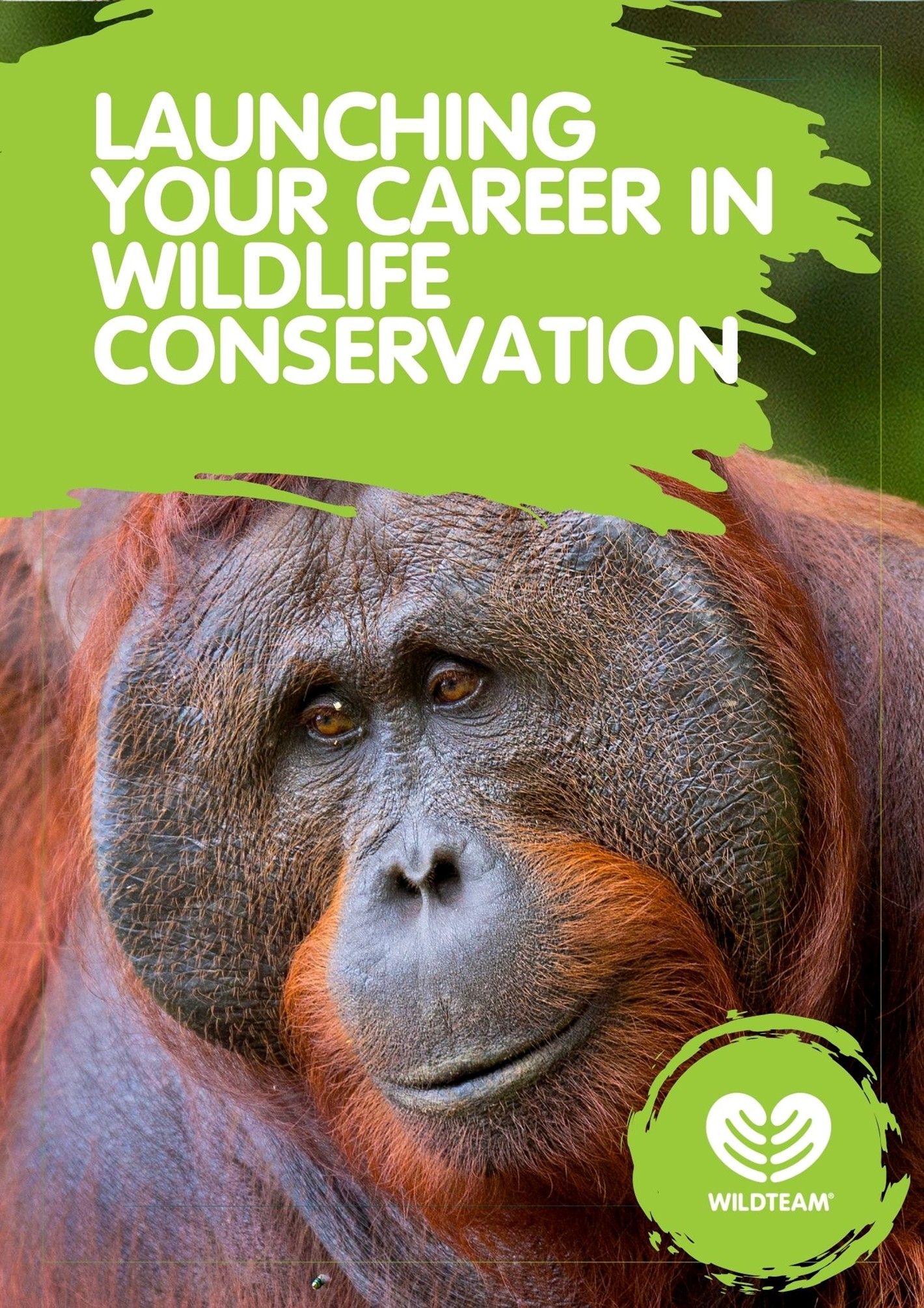
UNLOCK OUR FULL BEST PRACTICES AND GET CERTIFIED CONSERVATION SKILLS
Ready to go deeper?
Build practical skills for wildlife conservation by exploring our expert-led courses designed to help you apply what you’ve learned in real-world contexts. From career development to technical conservation tools, our training is built to support your next step.
Contents
-
Why surface fit is not enough
-
Assessing intrinsic motivation
-
Assessing growth potential
-
Assessing fulfilment
-
Putting the three dimensions together
-
What to do when the assessment is mixed
-
FAQ
Why surface fit is not enough
Surface fit means the role looks right on the outside: the organisation works on species or habitats you care about, the job title sounds interesting, the location works, the salary is acceptable. These things matter, but they do not tell you whether the day-to-day reality of the role will sustain you.
A policy officer who takes a role because it seems prestigious, without considering whether they find analytical, legislative work absorbing, may discover that reading consultation documents and attending government meetings does not engage them in the way they hoped. A field researcher who has always assumed they want to be in the field may find that extended data collection in remote conditions without variety or social contact is not what they imagined. Neither person did anything wrong. They simply skipped the step of assessing whether the work itself was a fit.
Three questions cut through surface fit. Does the work itself engage me? Will this role develop me? Will this role give me a sense that my contribution matters?
Assessing intrinsic motivation
Intrinsic motivation is the drive that comes from the work itself, the satisfaction of doing something you find interesting, absorbing, and stimulating, independent of the salary or the status that comes with it. Roles built primarily on external motivation tend to feel hollow once the novelty wears off. Roles that engage intrinsic motivation sustain energy and commitment even when conditions are difficult.
To assess whether a role engages your intrinsic motivation, look closely at what the work involves day to day rather than at the mission of the organisation. These are two different things. You can care deeply about protecting large carnivores and find the day-to-day work of a monitoring technician repetitive and isolating. You can have no prior connection to freshwater invertebrates and find the analytical and research work involved in studying them deeply absorbing.
Ask yourself: if I imagine a typical week in this role, and I set aside the fact that it is conservation work, does the nature of the activities described engage and energise me? Or is my interest more in the concept of the role than in what it actually involves?
Use the following scale to score yourself on intrinsic motivation:
- Strong fit. The work itself excites and engages me, and I can see it sustaining my motivation and energy over the long term.
- Workable fit. The work is broadly interesting and any aspects that feel less stimulating are outweighed by those I find motivating.
- Possible fit. I have some uncertainty about whether the work itself would sustain my motivation and want to reflect further before committing.
- Poor fit. This work would not engage or energise me.
The easiest way to do this is using the Wildlife Conservation Job Worksheet, which comes free with the best practice.
Assessing growth potential
A role that fits well today but offers little room to develop can quickly become a source of frustration. People tend to disengage when the learning stops, when they stop being stretched, or when they can see no clear pathway forward from where they are. Growth potential matters both in the immediate sense, whether a role will challenge you at the level you are entering, and in the longer-term sense, whether the pathway through that work area leads somewhere you want to go.
Growth potential is not only about formal promotion. It is also about whether a role will give you experience, skills, and relationships that open doors further along your career. A role at officer level in a work area you find technically interesting may offer substantial growth even if the organisation has no obvious senior positions for you to move into, because the skills you build and the network you develop while in it will open opportunities elsewhere.
To assess growth potential, think about the full arc of the work area across officer, manager, and senior manager levels. Ask yourself: how much would this role stretch me right now? What skills and experience would I gain over the next two to three years? And does the pathway forward in this area of work, across those three levels, offer the kind of challenge and development I am looking for?
Use the following scale to score yourself on growth potential:
- Strong fit. This role would stretch me, develop my skills and experience, and offers a clear pathway for progression.
- Workable fit. The role offers development opportunities and any limitations in growth potential are outweighed by other factors.
- Possible fit. I am uncertain about how much this role would develop me and want to reflect further before committing.
- Poor fit. This role would offer limited development and is unlikely to build the experience I need to progress.
Assessing fulfilment
Fulfilment is the sense that what you do matters, that your work connects to something you care about deeply enough to sustain you through the difficulty and frustration that every conservation role involves at some point.
Fulfilment is not the same as intrinsic motivation. You might find the work of a communications officer intrinsically engaging, enjoying the craft of writing, design, and audience strategy, while feeling a persistent sense that you are not close enough to conservation outcomes to feel truly fulfilled. Another person in the same role might find that knowing their communications work is directly enabling field programmes gives them more than enough sense of purpose. Neither response is right or wrong. They reflect different personal connections to meaning in work.
To assess fulfilment, think about what gives you a genuine sense of purpose in your work, rather than what sounds meaningful in theory. Ask yourself: does this role connect to those things? Does the contribution it makes to conservation outcomes, and the way it makes that contribution, feel significant to you?
Use the following scale to score yourself on fulfilment:
- Strong fit. This role would give me a strong and lasting sense of purpose.
- Workable fit. The role would be broadly fulfilling and any aspects that feel less meaningful are outweighed by those that give me a real sense of purpose.
- Possible fit. I am uncertain about whether this role would give me the sense of fulfilment I need and want to reflect further.
- Poor fit. This role would not give me the sense of meaning and purpose I need to feel fulfilled.
Putting the three dimensions together
Once you have scored a role across all three dimensions, look at the pattern. A role that scores strong or workable across all three is worth committing to fully. A role that scores possible on one dimension is worth exploring further before you decide, whether through informational conversations with people already doing the work, a trial period of volunteering, or deeper research into what the day-to-day reality involves.
A role that scores poor on any one dimension deserves caution, even if the other two scores are strong. A role that is intrinsically engaging and fulfilling but offers no development will eventually feel stifling. A role with strong growth potential and fulfilment but that does not engage you in the work itself will feel like effort without reward. Fulfilment without motivation or growth tends to produce people who care deeply about the mission but find themselves unable to sustain the energy the work requires.
The purpose of this assessment is not to rule out imperfect options, which in a competitive sector would rule out most of them. It is to help you go into each role you pursue with a clear understanding of why it fits, what you will need to sustain in it, and what you might need to build or find elsewhere.
What to do when the assessment is mixed
In the conservation sector, entry is often constrained enough that candidates cannot always hold out for roles that score strongly on all three dimensions. A possible fit on one dimension is not necessarily a reason to decline an opportunity. It is a reason to be clear-eyed about what you are taking on.
If a role scores possible on growth potential, think about what you would need to create development for yourself within it: whether there are projects you could take on, skills you could build alongside the role, or relationships you could cultivate that would compensate for what the role itself does not offer.
If a role scores possible on fulfilment, think about what else in your life or work connects you to a sense of purpose, and whether the role gives you enough proximity to outcomes that matter to you to sustain your commitment.
If a role scores possible on intrinsic motivation, consider whether the aspects of the work that do engage you are substantial enough to carry you through the ones that do not. No role is uniformly absorbing, and workable fit on motivation is often more sustainable than it sounds in theory.
The assessment is a thinking tool, not a decision rule. Use it to make a considered choice rather than to avoid making one.
ONE PAYMENT, FULL ACCESS, MAXIMUM VALUE.
Project Management | Project Planning | Grant Writing | Stakeholder Engagement | Monitoring and Evaluation
Unlock unlimited learning with the WildTeam Annual Membership. For £290/year, you get full access to every course in our school, including all current courses and all future courses released during your membership. Individual courses cost £190 each. With 7 courses already available, buying them separately would cost £1330. Membership gives you access to all of them, plus future releases, for less than the price of two.
FAQ
How do I find out what a role involves day to day if I have never done it?
The most direct route is to speak to someone currently doing it. Informational conversations with practitioners are widely accepted in the conservation sector and most people are willing to spend twenty minutes describing their work to someone who asks thoughtfully. Prepare specific questions about the day-to-day reality: what does a typical week look like, what takes up most of your time, what is harder than people expect, what do you wish you had known before starting. Conservation sector events, LinkedIn, and professional body networks such as CIEEM or the Wildlife Society are all ways to find and approach practitioners.
Is it worth taking a role that scores poorly on fulfilment if it builds the experience I need?
Possibly, for a defined and limited period, if you are clear with yourself about what you are doing and why. A role that does not give you a sense that your contribution matters is hard to sustain over more than a year or two without it affecting your performance and wellbeing. If you are taking it as a strategic stepping stone, be clear about what you will gain from it, how long you plan to stay, and what the exit looks like. Treating it as a permanent arrangement tends not to serve either you or the organisation well.
How do I distinguish between a role that would not fulfil me and one I am simply nervous about?
Nervousness tends to be attached to whether you can do something, whether you will perform well, whether you will fit in. Lack of fulfilment is a different feeling: a sense that even if you did the role well, it would not feel like work that matters to you. One useful test is to imagine yourself in the role two years in, performing it competently, and ask whether you would feel that your work had been worthwhile. If the answer is yes but you still feel nervous, the issue is confidence rather than fit. If the answer is uncertain or no, the issue is more likely to be fulfilment.
Should I assess every possible role before I apply, or just the ones I am seriously considering?
A light version of the assessment is worth running early, even before you apply, because it helps you understand why you are pursuing a role and articulate that clearly in a cover letter or interview. A deeper version is worth running before you accept an offer. The risk of over-assessing before applying is that it creates an additional barrier in a sector where getting to the interview stage is already competitive. The risk of under-assessing before accepting is that you commit to a role that does not fit well enough to sustain you.
What if two roles score similarly and I cannot choose between them?
Look at where the scores come from rather than just the totals. A workable fit on growth potential because the role would stretch you significantly but has a limited progression pathway is a different situation from a workable fit because the role is comfortable but not especially challenging. Similarly, a possible fit on fulfilment that comes from uncertainty about the work area is different from a possible fit that comes from a clear sense that the contribution the role makes is not quite what you care about most. The quality of the fit within each score matters as much as the score itself.
How often should I reassess a role I am already in?
Reassessing once a year is worth doing, not to create unnecessary restlessness, but to check that the role is still serving your development and that you are still engaged with the work. The three dimensions can shift over time: a role that offered strong growth potential in year one may have plateaued by year three, or a role you found intrinsically motivating early on may have become routine as you have mastered it. Noticing this clearly and early gives you more options than noticing it only once disengagement has set in.
Latest from our blog
Related articles
-
What is conservation project management?
-
When perfect planning kills wildlife
-
Why your conservation project needs one person in charge
-
All conservation projects need a plan phase
-
How to manage risks in conservaion projects
-
Managing meetings in conservation projects
-
Conservation project management glossary: 50+ terms defined
-
Conservation project planning glossary: 20+ terms defined
-
What is conservation monitoring and evaluation?
-
What is conservation stakeholder engagement?
JOIN THE CONVERSATION

EMPOWERING CONSERVATIONISTS TO RESTORE NATURE
We give conservationists worldwide the knowledge, the skills, and the community support they need to design and deliver conservation projects that have more impact.
WILDTEAM is a registered charity in England and Wales. Number 1149465. © 2026 by WildTeam
Stay connected with WildTeam
Get practical tools, training insights, and opportunities to help you deliver more effective conservation projects.
Thanks for connecting!