How do you prepare a strong conservation job application?
Apr 29
/
Adam Barlow

Quick answer
A strong conservation job application has multiple components, each of which needs to be tailored specifically to the job and organisation you are applying to. Managing the process well, from documenting the timeline before you begin to reviewing every document before you submit, is what separates candidates who produce coherent, compelling applications from those who rush or send documents that are not properly matched to what the employer has asked for.
A generic application, however well written, will not perform as well as one that speaks directly to the criteria, context, and language of the specific job in front of you.
A generic application, however well written, will not perform as well as one that speaks directly to the criteria, context, and language of the specific job in front of you.
The activities involved in preparing an application are: documenting the application process, creating a task list, creating a focused CV, writing a persuasive cover letter, completing any application form, strengthening your digital profile, and sending in the application correctly.
Source: WildTeam. (2026). Launching Your Career in Wildlife Conservation v1. WildTeam UK, Cumbria, UK.
You can access this best practice as part of the Launching Your Career in Wildlife Conservation course.
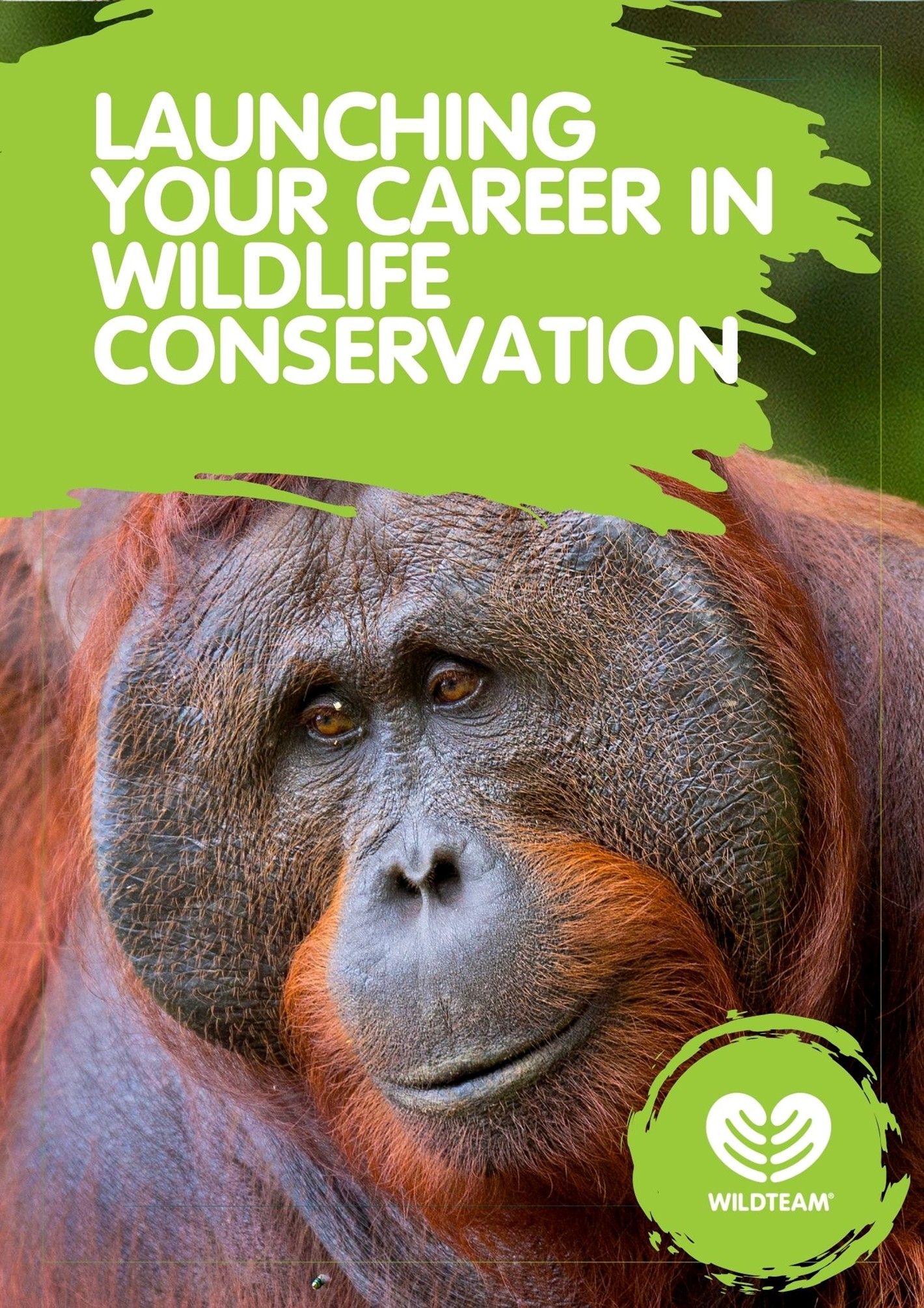
UNLOCK OUR FULL BEST PRACTICES AND GET CERTIFIED CONSERVATION SKILLS
Ready to go deeper?
Build practical skills for wildlife conservation by exploring our expert-led courses designed to help you apply what you’ve learned in real-world contexts. From career development to technical conservation tools, our training is built to support your next step.
Contents
-
Document the application process first
-
Create an application task list
-
Create a focused CV
-
Write a persuasive cover letter
-
Complete any application form
-
Strengthen your digital profile
-
Send in the application correctly
-
FAQ
Document the application process first
Before writing a single word, map out the full application process. Conservation NGOs vary considerably in how they run recruitment. Some move quickly from closing date to interview. Others take several weeks. Some do not communicate clearly with candidates about what to expect or when. Understanding the timeline as fully as possible from the outset allows you to plan your effort and manage your expectations.
Use the WildTeam Wildlife Conservation Job Worksheet to record the following for each job you are applying for: the application closing date including the time where specified; the date candidates will be informed of the outcome; the interview date or window; any additional stages such as a written task, presentation, or site visit; and the expected start date. A start date that is not workable for your circumstances is worth knowing before you invest time in an application.
Create an application task list
With the process documented, break down everything the application requires into a clear list of tasks with realistic deadlines. List every component the application requires, whether that is a CV, a cover letter, a completed application form, competency questions, work samples, or references. Break each component into specific tasks: drafting, reviewing, and finalising are separate tasks, not one. Sequence the tasks in a logical order, since some depend on others being completed first. Assign a target completion date to each task, working backwards from the deadline and building in time at the end for a final review. Track progress as you go.
The WildTeam Wildlife Conservation Job Worksheet (available with the best practice) includes a task list template for managing this across multiple applications simultaneously.
Create a focused CV
Your CV should be two pages or under. Every section and every line should strengthen your application for this particular job. A CV that is a comprehensive record of everything you have ever done is not a focused CV.
Structure. A focused conservation CV includes the following sections in this order. Essential sections: personal details, professional profile, personal statement, work experience, voluntary experience, education, and skills and training. Optional sections: hobbies and interests, and publications.
Personal details. Include your name, location (town or city, not your full address), email address, phone number, and LinkedIn profile link. For example: Ruth Taylor, Inverness | ruth.taylor@email.com | 07700 900000 | linkedin.com/in/ruthtaylor34z
Professional profile. A short line of three to five keyword phrases that captures your core areas of expertise and signals immediately what you offer. Tailor this directly to the job, using language drawn from the job description. For example: Project coordination | Budget tracking | Partner liaison | Habitat management.
Personal statement. Three to five sentences summarising who you are, what you offer, and what you are looking for. Draw directly on the language of the job description and reflect the competencies the employer has identified as essential. Write it specifically for this job. For example: "A conservation support professional with three years of experience in project coordination and administration within a Highland land management context, looking to take on a first substantive programme coordination role. Currently building project management skills through WildTeam's Project Management for Wildlife Conservation course."
Work experience. List employment history in reverse chronological order. For each entry include your job title, organisation, dates, and a concise description of what you did and what you achieved. Focus on the responsibilities and achievements most relevant to the job you are applying for. Where a previous job appears only loosely relevant, think about what transferable skills it demonstrates rather than describing it in full detail.
Voluntary experience. Conservation employers value voluntary experience at entry and early career level. List relevant voluntary roles in reverse chronological order using the same format as work experience. Describe the responsibilities you held and the outcomes you contributed to.
Education. List qualifications in reverse chronological order. Include the qualification, institution, dates, and your result where it is strong. Include your dissertation title if it is directly relevant to the job, and note any particularly relevant modules or academic projects that strengthen your case.
Skills and training. Capture relevant technical skills, software proficiency, languages, and professional development that do not fit naturally into your education section. Lead with the skills the employer has asked for.
Hobbies and interests. A brief account of what you do outside work can bring your application to life in a way that a list of competencies cannot. Include interests that reflect something real about you, whether or not they are directly related to conservation.
Presentation. Choose a clean, readable font such as Arial, Calibri, or Georgia. Use formatting consistently throughout: if you bold your job titles, bold all of them. Use colour sparingly, one accent colour for headings only if at all. Leave enough white space so the document is easy to navigate. Do not include a photograph. Save as a PDF unless the employer has specifically asked for a Word document.
An example CV is provided as a supporting resource in the WildTeam best practice .
Write a persuasive cover letter
A cover letter is where you make your case for the job in your own words. Where your CV presents the facts of your experience, your cover letter explains why that experience makes you right for this particular job, at this particular organisation, at this stage of your career. It should fit on one to two pages. Every sentence should earn its place.
A persuasive cover letter follows this structure: opening, why this job, why this organisation, how you meet the essential criteria, how you meet any desirable criteria, and closing.
Opening. State the job you are applying for and where you saw it advertised, then immediately follow with a sentence that signals why you are a strong candidate. For example: "I am applying for the Restoration Programme Coordinator job at Nature First, advertised on Environment Jobs. With three years of project coordination experience in Highland land management and a strong track record of keeping complex workplans on schedule, I believe I have the right skills and experience for this job."
Why this job. Explain what draws you to this particular job. This should reflect motivation rooted in the nature of the work itself: what it involves day to day, what it contributes to conservation, and why that matters to you.
Why this organisation. Demonstrate that you have researched the organisation. Reference something particular, such as a programme they run, an approach they take, or a value they articulate, and explain why it resonates with you. This shows the employer you are applying to them specifically, not to any available conservation job.
How you meet the essential criteria. This is the central and most important section of your cover letter. Work through each essential criterion listed in the job description in turn and provide specific, evidenced examples of how you meet it. A potential employer will be most impressed by what you achieved, not only what activities you did. A communications professional who writes that they managed social media channels tells an employer very little. One who writes that they grew their organisation's Instagram following from 2,000 to 11,000 in eighteen months gives them something concrete to assess. Where you cannot quantify what you achieved, be as precise as possible about what you did, what you decided, and what changed as a result. Where you have a gap against an essential criterion, address it directly rather than leaving it out.
How you meet any desirable criteria. Where you can credibly address desirable criteria, do so briefly.
Closing. A brief, confident paragraph expressing your enthusiasm for the opportunity, confirming your availability for the interview, and thanking the employer for their time.
Use the same font and formatting as your CV. A consistent visual style across your application documents signals attention to detail. Address the letter to a named individual wherever possible. Save and submit as a PDF.
An example cover letter is provided as a supporting resource in the WildTeam best practice suite.
Complete any application form
Some conservation NGOs use a standard application form rather than, or in addition to, a CV and cover letter. Where this is the case, the structure is fixed and you work within the sections and word limits the employer has set. The underlying task is still to present clear, specific, and evidenced answers that demonstrate you meet the criteria.
Read the form in full before you begin writing so you understand what each section is asking for. Draft your answers in a separate document first, so you can write freely, review, and refine before committing. Many online application forms do not allow spell checks or easy editing once text has been entered. Respect word limits precisely: ignoring them may invalidate your application. Use specific examples throughout, naming the project, describing the outcome, and quantifying the result where you can.
Strengthen your digital profile
Employers routinely look beyond the documents you submit to find out more about candidates they are considering. A digital profile that is out of date, inconsistent with your application, or contains content you would not want a prospective employer to see will undermine the impression you have worked hard to create.
Before submitting any application, review your LinkedIn profile with the specific job in mind. Update your headline to align with the job you are applying for. Review your summary so it speaks to the skills and experience most relevant to the position. Ensure your experience section reflects the criteria in the job description, and that the language you use echoes the employer's own terminology where appropriate. Check that your LinkedIn experience is consistent with your CV: dates, job titles, and organisations should match exactly.
Review the privacy settings on your personal accounts on other platforms. Content you would not want a prospective employer to see should not be publicly visible during a job search. If you use platforms such as LinkedIn, Instagram, or X publicly to share conservation content, look at what is visible with an employer's eyes. Content that is inflammatory, inconsistent with your application, or carelessly presented can undermine an otherwise strong candidacy.
Send in the application correctly
A strong application can be made to count for nothing if it is submitted incorrectly. Read the submission requirements carefully before you send anything. Confirm the correct email address or submission portal, the file format required, and any specific instructions about how documents should be named or labelled. Some employers will automatically reject applications that do not follow their submission instructions precisely.
If submitting by email, include a brief covering message: a short, professional note that introduces your application, states the job you are applying for, confirms what you have attached, and closes with a polite sign-off. Three to four sentences is enough. Keep a copy of everything you submit, clearly labelled with the job and organisation, so you can refer back to exactly what you said if you are invited to interview.
Record the submission in the WildTeam Wildlife Conservation Job Worksheet, noting the date and time of submission and the date by which you expect to hear whether you have been shortlisted. Once submitted, the application is out of your hands. The most productive thing you can do at that point is return your attention to the other opportunities in your pipeline.
ONE PAYMENT, FULL ACCESS, MAXIMUM VALUE.
Project Management | Project Planning | Grant Writing | Stakeholder Engagement | Monitoring and Evaluation
Unlock unlimited learning with the WildTeam Annual Membership. For £290/year, you get full access to every course in our school, including all current courses and all future courses released during your membership. Individual courses cost £190 each. With 7 courses already available, buying them separately would cost £1330. Membership gives you access to all of them, plus future releases, for less than the price of two.
FAQ
How do I tailor a CV when I am applying for multiple jobs at once?
Keep a master CV containing everything that might be relevant, and create tailored versions from it for each application. The sections that should change between applications are the professional profile, the personal statement, and the ordering and emphasis of responsibilities within each role. The factual content, dates, and structure remain constant. Using the job description as a checklist and ensuring each essential criterion is reflected somewhere in the CV is a reliable way to tailor without starting from scratch each time.
Should I include voluntary experience even if it is not directly related to the job?
Yes, if it demonstrates a relevant competency or says something meaningful about who you are as a candidate. Volunteering at a food bank does not demonstrate ecological knowledge but does demonstrate community commitment, reliability, and interpersonal skills, all of which are relevant to community-facing conservation roles. Conservation employers at entry level are often as interested in character and commitment as in specific technical experience. The key is to describe what you did and what it demonstrates rather than simply listing where you volunteered.
What should I do if I have a gap against an essential criterion?
Address it directly in your cover letter rather than leaving it out. Employers notice omissions. A candidate who says "I have not managed a budget independently but I have supported budget tracking across a multi-project portfolio and am completing WildTeam's Project Management for Wildlife Conservation course to build this further" is in a stronger position than one who says nothing on the point and hopes the employer will not notice. Transparency about a gap, paired with evidence of what you are doing to address it, is a more compelling approach than silence.
How important is the covering email when submitting by email?
It matters more than most candidates assume. The covering email is the first thing the employer reads. A careless or overly brief email sets a poor tone before a single document has been opened. A short, well-written email that states the job clearly, references what is attached, and closes professionally makes a positive first impression that the documents then either confirm or undermine. It does not need to be long. Three to four well-constructed sentences are enough.
Should I follow up after submitting an application?
Generally no, unless the employer has indicated a date by which candidates will be informed and that date has passed without contact. Following up before the stated timeline suggests impatience and can create a poor impression. If no timeline has been given and a reasonable period has passed, typically two to three weeks, a brief, polite email asking whether the vacancy has been filled is acceptable. Keep it short and professional.
How do I know if my CV is the right length?
Two pages is the standard for most conservation jobs. One page can work for candidates very early in their career with limited experience to present. More than two pages is rarely appropriate at officer or manager level, and signals a lack of editorial judgement rather than thoroughness. If your CV is running over two pages, look first at your personal statement and any sections where you are describing responsibilities in more detail than the job requires. Cutting to what is most relevant to this specific job is the most effective way to tighten length without losing impact.
Latest from our blog
Related articles
-
What is conservation project management?
-
When perfect planning kills wildlife
-
Why your conservation project needs one person in charge
-
All conservation projects need a plan phase
-
How to manage risks in conservaion projects
-
Managing meetings in conservation projects
-
Conservation project management glossary: 50+ terms defined
-
Conservation project planning glossary: 20+ terms defined
-
What is conservation monitoring and evaluation?
-
What is conservation stakeholder engagement?
EXPLORE
Success stories
Blog
Courses
Bursaries
Best practices
Team membership
Conservation Trainers Network
JOIN THE CONVERSATION

EMPOWERING CONSERVATIONISTS TO RESTORE NATURE
We give conservationists worldwide the knowledge, the skills, and the community support they need to design and deliver conservation projects that have more impact.
WILDTEAM is a registered charity in England and Wales. Number 1149465. © 2026 by WildTeam
Stay connected with WildTeam
Get practical tools, training insights, and opportunities to help you deliver more effective conservation projects.
Thanks for connecting!